 HOME
HOME
HISTORY OF NIPPON KEMPO
INTRODUCTION
Nippon kempo is a modern full-contact, competitive sparring sport that incorporates the best contemporary training methods. It is practised on mats and students wear a specialised form of armour, known as bogu.
It is the armour sparring that differentiates Nippon kempo from many other martial arts. Sparring in kempo is highly realistic; the techniques taught actually work and students experience high levels of adrenaline. Nippon Kempo is also very safe. The strict regulation of acceptable techniques, the high degree of mutual respect shown by students to each other and the safety equipment used mean that injuries are very rare. There are far-less so than in other martial arts that incorporate full or semi-contact sparring.
WHAT DOES THE NAMES MEAN?
The name Nippon Kempo (日本拳法) translates directly as Japanese way of the fist or boxing. The term kempo refers to Japanese martial arts that have a Chinese origin.
CREATION OF NIPPON KEMPO
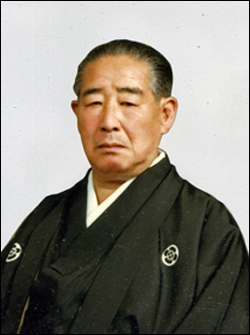
Nippon kempo was founded in Japan in 1932 by Sawayama Muneumi (1906-1977). Sawayama was an undergraduate of Kansai University, Osaka, at the time. He was born into a family that was descended from a Samurai family of the Nakaoka clan. Sawayama's martial arts training started with Judo at Junior High School. At Kansai University he practised both Karate and Judo. It was the simultaneous practice of various styles of martial arts that caused him to realise the effectiveness of a combination of forms.
HISTORICAL & CULTURAL ORIGINS
The martial arts have a very long history in Japan. Martial arts were the skills of fighting, the trade skills of a particular military class, the bushi, who emerged in feudal Japan in around the 11th century. The bushi, (more commonly known as samurai, bushi is an older, more precise term) were full time professional warriors and over time developed numerous systems of combat and military training. Many techniques and approaches were borrowed from continental Asia and gradually developed in Japan. The techniques used by the bushi were known collectively as bugei. The bugei included not only fighting skills, termed kakuto bugei , but also everyday skills needed by bushi such as horse riding – bajutsu .
From the middle of the 13th to the start of the 17th century Japan endured a period of continual political turmoil and virtual civil war as numerous rival factions fought for overall control. This was finally achieved in 1600, By Tokugawa Ieyasu (1543-1616) who became the first Shogun, a military leader formally, subordinate to the Emperor but in reality in absolute command.
With the gradual decline of the Shogunate in the later half of the 19th century the role (not to mention the power) of the samurai/bushi diminished. Moreover, impelled by this decline was a gradual transformation of many of the bugei. A number of bugei remained, and still exist, in their original form. These are the martial arts with the jutsu suffix, indicating a link to the real life and death fighting arts used by the samurai in actual combat. Such skills can no longer be fully practiced and now exist as demonstration and artistic activities.
Other bugei were modified and codified into “ways” and are known collectively as budō or martial ways. Budō are definitely derived from bugei and exist in complement to a jutsu form, no dō form exists without the jutsu form from which it stems.
Budō are a twentieth century phenomenon, they are linked to the original fighting arts and carry a strong imprint of them. However, the intention of practicing budō forms is not to kill or incapacitate an opponent, as with jutsu forms, rather they are concerned with the perfection of action and sporting prowess. Budō forms have further divided into classical or true forms and modern cognate or derivative forms. Cognate forms are those martial sports that while having a definite link to older martial practices make the most of modern training techniques. They often incorporate competition and coloured belt systems; classical budō and jutsu systems do not.
Sports such as Judo, Kendo and Nippon kempo are definitely cognate budō martial sports. They originate in older martial systems but are fully codified sports that make use of advances in sports training and physiological knowledge.
SPREAD OF NIPPON KEMPO
In Japan Nippon Kempo is mainly practised in high schools and universities in the Kanto (Tokyo), Chubu (Nagoya) and Kansai (Osaka) areas. In recently year it has been taken up by the police and Japanese self defence force (army). It has also been recognised by the Ministry of Education as an official sport for schools. At present, in the UK, it is practised in London, Liverpool, Surrey and Swansea.
UK: UNIQUE PEDIGREE
UK Nippon Kempo has a unique pedigree. Luther De Gale, the founder of Nippon Kempo in the UK, travelled to Japan in 1975 and trained intensively for a year. Before Muneumi Sawayama sadly passed away in 1976, Luther had the privilege of meeting the Nippon Kempo founder. The chairman of the Japanese Nippon Kempo association, Fumio yano 10th Dan, ask Luther to introduce Nippon Kempo into the UK on his return home and gave him a certificate recognising him as the UK founder.
In 1977 Luther introduced Nippon Kempo into the UK and started the process of building a UK association with his brother Hamilton, who was his first student. Nippon Kempo in the UK follows Sawayama’s original concept of competition based on skill and correct execution of techniques, rather than attrition and knockout. In 1986 the UK association embarked on a program of greater understanding and mastery of Nippon Kempo. Many of our senior members went to train in Japan for periods of 10 days to a year. We also organised some highly successful squads of 10 to 15 delegates to train and compete in competitions in Osaka. With the support of the Japanese Nippon Kempo association, Professor Iwao came to London and coached us for three months. This was followed by a number of coaching visits from Professor Doya, who is a direct student of Nippon Kempo founder Muneumi Sawayama. Professors Doya and Iwao are co-authors of the official Nippon Kempo Handbook.
Our program for developing excellence proved itself in 1992. The first ever international competition held outside Japan, was hosted by the UK and sponsored by National Panasonic. Teams from the UK, Japan, USA, France, and Italy took part. The UK team, captained by Paul Cooke, won the day. This was a fantastic achievement for the UK’s Grand Champion Paul Cooke and credit to the coaching and mentoring of both Professors Doya and Iwao.